

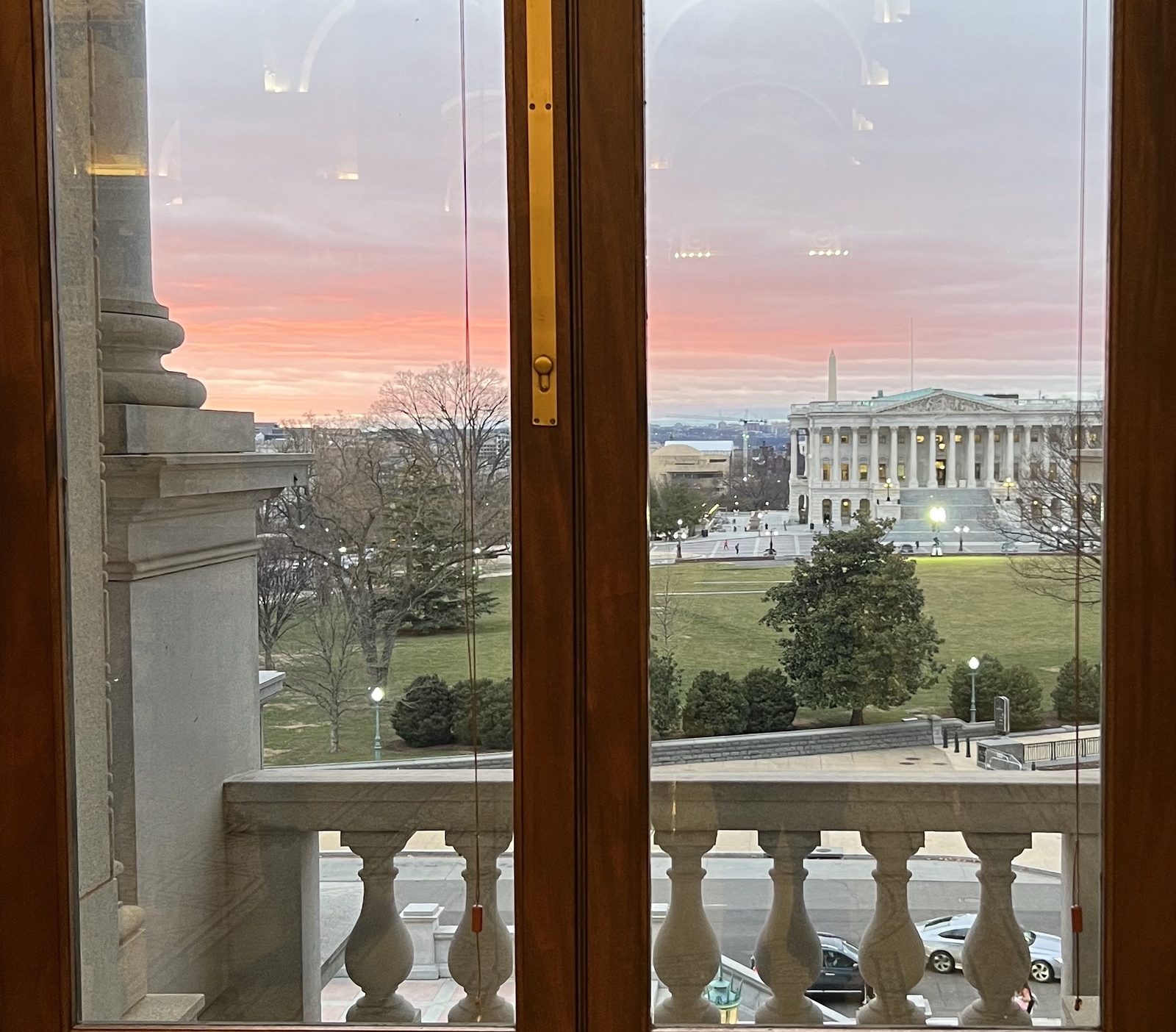
The Investigative Journal’s weekly Court Watch surveys the most significant rulings and filings from July 13 through July 20, 2026, grouped by court level, with links to the underlying opinions and dockets where available.
With the Supreme Court in its summer recess, the week’s most consequential legal action unfolded in the federal courts of appeals and the district courts. Judges reshaped Second Amendment doctrine, revived a contested election-mail rule ahead of the November midterms, and tested the limits of presidential control over the civil service. One federal judge in Florida took the rare step of voiding a government settlement and sanctioning attorneys. Below, the rulings that mattered.
At the Supreme Court
The justices issued no merits opinions during the week, consistent with the court’s summer recess following the close of its 2025–26 term at the end of June. Court-watchers note that the emergency, or “interim,” docket has increasingly filled the summer months; SCOTUSblog has documented dozens of substantive orders in recent recesses. This week, however, the public docket was quiet on new emergency rulings.
The most closely watched development remained a cert grant from the term’s final order list. On June 30, the court agreed to decide whether the Second Amendment protects possession of AR-15–style semiautomatic rifles, taking up Viramontes v. Cook County (from the Seventh Circuit) alongside a Connecticut case, Grant v. Rovella, per CNN. That grant frames the circuit-level activity described below and is expected to be argued in the 2026–27 term.
Away from the docket, Justices Elena Kagan and Amy Coney Barrett drew attention for appearances before Congress. SCOTUSblog compiled reactions to their July 16 testimony, which touched on the emergency docket and the court’s public standing. Separately, the court announced that Johnny Brown, the father of Justice Ketanji Brown Jackson, passed away at 80.
Federal Courts of Appeals
Third Circuit strikes down New Jersey’s assault-weapons ban (en banc, 10–5)
Sitting en banc, the U.S. Court of Appeals for the Third Circuit ruled 10–5 on July 17 that New Jersey’s prohibition on semiautomatic rifles and magazines holding more than 10 rounds is unconstitutional, according to Courthouse News Service. Writing for the majority, Circuit Judge Arianna J. Freeman — a Biden appointee — concluded that the state’s regulations lacked a sufficient historical analog under the Supreme Court’s 2022 decision in New York State Rifle & Pistol Association v. Bruen. The opinion observed that the “societal concern of people misusing weapons” has “persisted since the 18th century,” yet the Founders “did not” adopt a comparable ban.
Concurring, Circuit Judge Paul B. Matey, a Trump appointee, wrote that the ruling “returns the Second Amendment to its appropriate place in our constitutional design.” In dissent, Circuit Judge Patty Shwartz, an Obama appointee, argued that AR-15–style rifles fall outside the amendment’s protection because of their “disproportionate criminal use, military history, and combat-oriented features,” and warned that the majority adopted “a contemporary lens” at odds with the historical inquiry Bruen requires. The Association of New Jersey Rifle & Pistol Clubs, which brought the challenge, and its members had litigated the magazine limits since 2018.
The decision deepens a split among the circuits and lands as the Supreme Court prepares to review semiautomatic-rifle bans next term, making the Third Circuit’s reasoning a likely reference point. New Jersey Governor Mikie Sherrill, in a statement reported by The Hill, said the state would “not back down” and defended its firearms laws. State officials may seek Supreme Court review or further en banc proceedings; the ruling remains subject to appeal.
D.C. Circuit pauses injunction, reviving USPS mail-ballot rule pending appeal
A three-judge panel of the U.S. Court of Appeals for the D.C. Circuit on July 17 stayed a district-court injunction that had blocked the U.S. Postal Service from advancing a proposed rule tied to President Trump’s March executive order on citizenship verification in federal elections. As The Hill reported, the panel paused an order from U.S. District Judge Emmet Sullivan while the litigation proceeds, allowing the agency to continue developing standards that would require states to submit voter lists and serialized ballot barcodes before USPS transmits certain election mail.
The panel found that USPS had made a strong showing on two points: that the NAACP’s challenge may not yet be ripe, and that the proposed rule likely would not violate an earlier settlement even if finalized. The judges also credited the agency’s argument that keeping the injunction in place could prevent a final rule before the 2026 general election, writing that “there can be no do-over” once the vote occurs, according to Democracy Docket.
The stay does not resolve the rule’s legality. A separate injunction issued in June by a federal judge in Massachusetts, in a suit brought by 23 states, continues to block the executive order in those jurisdictions and is unaffected by the D.C. Circuit’s action. Both matters are expected to move quickly given the election calendar.
Seventh Circuit vacates Clearview AI biometric-privacy settlement
On July 13, the U.S. Court of Appeals for the Seventh Circuit vacated a district court’s approval of a novel class-action settlement in Weissman v. Clearview AI, No. 25-1673. The underlying litigation alleged that Clearview violated privacy laws by scraping public photographs to build its facial-recognition database. Rather than cash, the settlement would have given class members an equity stake in the company payable on a future IPO or sale, as summarized by the Duane Morris Class Action Defense blog.
The appeals court identified a “key procedural problem”: the absence of separate class representatives for the nationwide class and the state-specific subclasses. Because no representative of the nationwide class alone participated in allocating the settlement’s benefits, the court could not confirm that each group’s interests were independently represented, per coverage by Law360. The ruling signals that where claimants have conflicting stakes in how proceeds are divided, courts will expect each group to have its own representative and counsel at the negotiating table. The case returns to the district court for further proceedings.
Federal District Courts
Southern District of Florida voids IRS settlement, orders sanctions
In one of the week’s most unusual rulings, U.S. District Judge Kathleen M. Williams on July 13 issued a 56-page order nullifying a settlement between the administration and the Internal Revenue Service, finding it an improper use of the court system, according to CNN and the Associated Press. Court filings indicate the agreement would have established a roughly $1.776 billion “anti-weaponization fund” and extended immunity to certain “related parties.” The judge wrote that the matter “was brought for an improper purpose — to gain the imprimatur of judicial legitimacy for a ‘settlement’ that had no viable basis in law or fact.”
Judge Williams also imposed sanctions and referred an attorney, Alejandro Brito, to the Florida Bar for potential disciplinary action, directing that a copy of her order be added to disciplinary proceedings that records indicate are already pending involving other senior Justice Department officials. The order reflects the court’s findings in a contested matter; it does not represent a final adjudication of any individual’s conduct, and those referred are entitled to respond in the relevant disciplinary forums.
The ruling can be appealed, and the government may seek review or reconsideration. As of publication, the Justice Department had not issued a public statement responding to the order. The Investigative Journal will update this item if an official response is provided.
District of Massachusetts bars a grant-termination clause sought by 23 states
U.S. District Judge Indira Talwani on July 17 granted summary judgment to a coalition of 23 states, barring the administration from relying on a grant-termination clause to cut federal funding, the Associated Press reported. The clause — first introduced in 2020 and revised in 2024 — permits an agency to terminate an award that “no longer effectuates the program goals or agency priorities.” The states argued it had been used to justify cuts spanning crime prevention, food security, and scientific research.
The judge denied the government’s motion to dismiss and concluded the clause could not serve as a lawful basis for the terminations at issue, according to Boston.com. The decision is one of several recent rulings testing how far agencies may go in redirecting appropriated funds, and it, too, may be appealed.
Eastern District of Virginia finds FEMA official’s firing unlawful
U.S. District Judge Michael Nachmanoff ruled that the administration violated federal law when it removed Mary Comans, the Federal Emergency Management Agency’s former chief financial officer, without following civil-service procedures, the Washington Examiner and Newsweek reported. The judge held that the government could not invoke presidential authority under Article II to bypass the removal procedures Congress established for career employees.
Comans was dismissed in early 2025 after Department of Homeland Security officials alleged she authorized payments connected to New York City migrant-shelter operations — allegations that remain contested and were not the subject of any finding of wrongdoing in this ruling. The court ordered that she is entitled to a “name-clearing hearing” but, according to Law&Crime, did not order her reinstated. The decision adds to a growing body of litigation over the scope of presidential removal power following the Supreme Court’s term-end rulings on independent agencies.
State Courts
Most state high courts were also in a summer lull, but two state-court threads drew attention. In Wyoming, the state Supreme Court earlier this spring lifted a district-court injunction that had blocked disbursements under the state’s universal education-savings-account program; as WyoFile and State Court Report detailed, the program opened to applicants on July 6, even as the underlying constitutional challenge to the vouchers continues in the lower court.
In Texas, a concrete step followed the state Supreme Court’s spring decision reinstating the Department of State Health Services’ controlled-substances definitions for THC: the definitions were published in the July 10 Texas Register and are set to take effect July 31, with a late-July trial pending on enforcement, per KXAN and FOX 26 Houston. Both matters illustrate how state high-court rulings continue to reverberate through administrative and trial dockets during the recess.
Cases to Watch in the Coming Week
Semiautomatic-rifle bans at the Supreme Court. With the Third Circuit now aligned against comparable rulings from the Second and other circuits, the justices’ grant in Viramontes v. Cook County and Grant v. Rovella positions the coming term to potentially set a national standard. Watch for the briefing schedule and any amicus activity.
The USPS mail-ballot rule. The D.C. Circuit’s stay is only an interim step. Expect expedited briefing on the merits, continued proceedings before Judge Sullivan, and parallel movement in the Massachusetts case brought by 23 states — all against a tight election calendar.
Fallout from the IRS ruling. Whether the government appeals Judge Williams’s order, and how the referenced disciplinary proceedings unfold, will bear watching. Any official response would be reported in a subsequent Court Watch.
Removal-power litigation. The FEMA ruling and the pending name-clearing hearing feed a broader docket over the president’s authority to fire career and independent-agency officials — including the Federal Reserve dispute involving Governor Lisa Cook, which returns to the lower courts on the merits after the Supreme Court’s June 29 order declining to let her removal take effect.
Court Watch is compiled from public court records, opinions, and dockets. Where a matter is pending, we note it; allegations are distinguished from findings, and parties named in adverse rulings retain the right to respond and to appeal. Featured image: the U.S. Supreme Court Building (public domain, CC0, via Wikimedia Commons).