

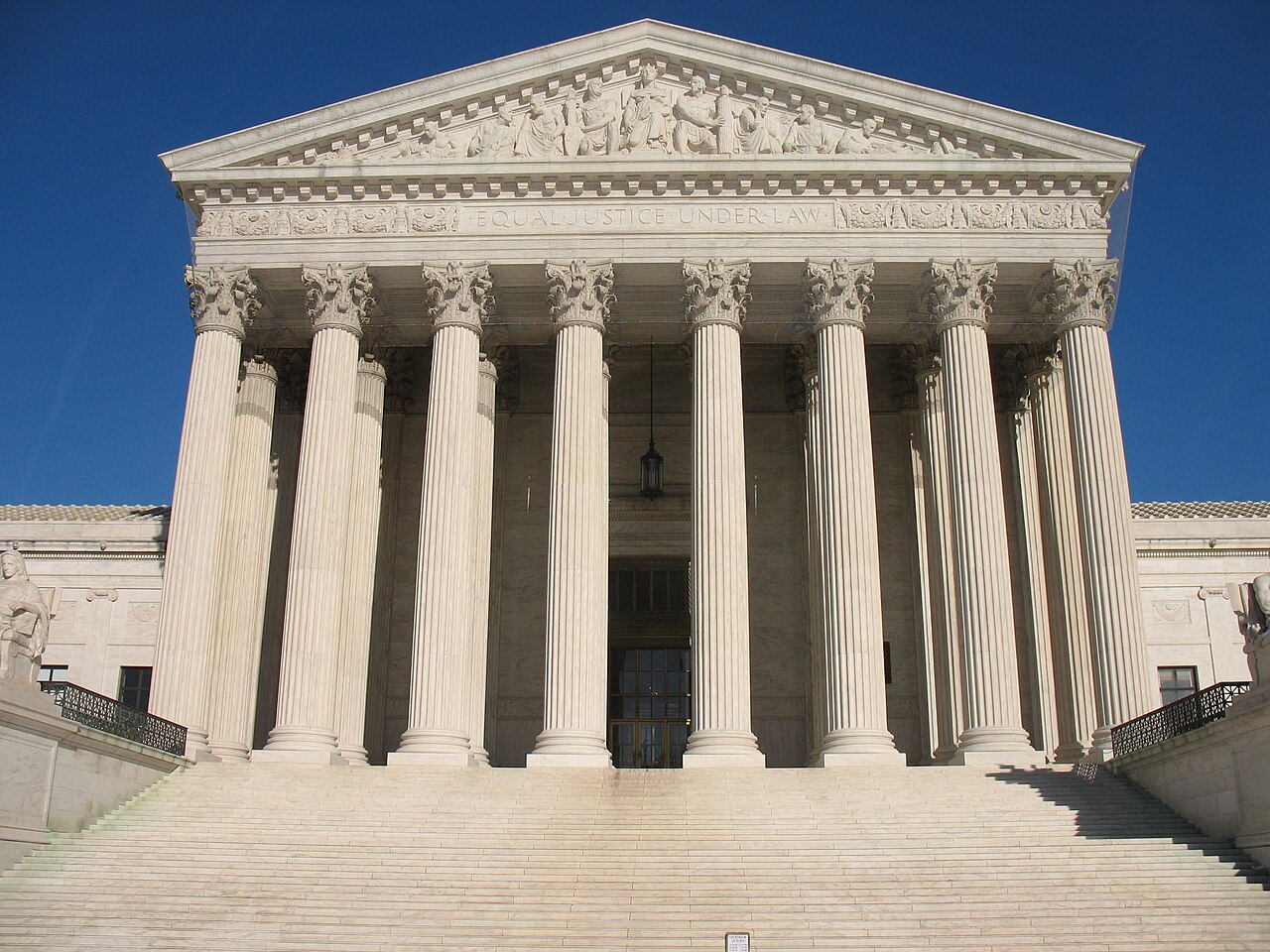
The Investigative Journal’s weekly survey of consequential court developments, drawing on the public docket, opinions on file, and contemporaneous analysis.
The Supreme Court used the closing days of May to clear a substantial portion of its remaining merits docket, handing down decisions that cut against federal prisoners seeking compassionate release, revived a long-running Helms-Burton damages action against the world’s largest cruise operators, and reopened a Mississippi capital case over the state’s use of peremptory jury strikes. Below the high court, the District of Columbia Circuit and the federal trial bench worked through a stack of regulatory, labor, and immigration disputes, while a federal judge in California continued to express skepticism over the proposed nationwide Roundup class settlement. The accountability journalism takeaway: the Court is closing the term with a mix of decisions that strengthen federal prosecutors’ hand on sentencing, expand statutory remedies for U.S. property owners, and leave several of the term’s most politically charged questions for June.
Supreme Court of the United States
Rutherford v. United States and Fernandez v. United States — Compassionate release narrowed
On May 28, the Court issued companion opinions in Rutherford (No. 24-820) and Fernandez (No. 24-556) sharply limiting the grounds on which federal prisoners can obtain a sentence reduction under 18 U.S.C. § 3582(c)(1)(A)(i). Records on file indicate the Court held in Rutherford that the sentencing disparity created by Congress’s non-retroactive change to 18 U.S.C. § 924(c)’s mandatory “stacking” penalties cannot, standing alone, constitute an “extraordinary and compelling reason” warranting a reduction. In Fernandez, Justice Amy Coney Barrett wrote for the majority that doubts about the validity of an underlying conviction likewise do not qualify under the statute; Justice Sonia Sotomayor concurred in the judgment, joined by Justice Elena Kagan, and Justice Ketanji Brown Jackson dissented alone.
Taken together, the rulings effectively shut the door on two pathways that defense lawyers and reform advocates had been using since the First Step Act expanded compassionate-release eligibility in 2018. Filings indicate the Department of Justice had urged the Court to police what it described as a growing practice by district judges of using § 3582 as a “back-door” vehicle to relitigate sentences Congress chose not to disturb. The decisions narrow that path without disturbing the underlying statute, and they reinforce a pattern this term of the Court reading federal criminal-procedure remedies strictly. Slip opinion in Rutherford; SCOTUSblog opinion summary.
Pitchford v. Cain — Batson claim revived in Mississippi capital case
The Court’s third May 28 decision, Pitchford v. Cain (No. 24-7351), cut the other way. Records show the Court reversed and remanded 5-4 in an opinion by Justice Brett Kavanaugh, holding that the Mississippi Supreme Court unreasonably applied Batson v. Kentucky when it concluded that Terry Pitchford waived his opportunity to rebut the prosecutor’s race-neutral reasons for striking four of five Black prospective jurors at his 2006 capital trial. Justice Neil Gorsuch dissented, joined by Justices Clarence Thomas, Samuel Alito, and Amy Coney Barrett.
The ruling restores Pitchford’s path to federal habeas relief and, according to analysts cited by the Constitutional Accountability Center, “recognizes a clear pathway to habeas relief” in cases where a state court denies a defendant the procedural opportunity to respond to Batson step-three justifications. The opinion is narrow on its face — it does not revisit Batson‘s substantive standard — but it represents the Court’s most consequential criminal-procedure ruling of the term for defendants and signals that the conservative majority remains willing to enforce existing race-discrimination precedent even amid skepticism of its broader equal-protection framework. Slip opinion; CAC analysis.
Flowers Foods, Inc. v. Brock — FAA Section 1 exemption broadened
Also on May 28, the Court unanimously ruled for a proposed class of Flowers Foods distributors in Flowers Foods v. Brock (No. 24-935). Justice Gorsuch wrote that a worker who transports goods on the intrastate leg of an interstate journey may qualify for the Federal Arbitration Act’s Section 1 exemption — keeping the worker out of mandatory arbitration — even if the worker never personally crosses state lines and never interacts with a vehicle that does. The decision, the fourth consecutive worker-side win at the Court in FAA Section 1 cases, will reach beyond the baked-goods industry and is expected to affect last-mile delivery, gig logistics, and franchised distribution arrangements nationwide.
Filings indicate Angelo Brock distributed Flowers products to Colorado retailers as an independent contractor. The Tenth Circuit had ruled for Brock; the Supreme Court affirmed. Defense employment counsel cited in industry analysis are advising clients with arbitration programs to re-examine whether their drivers’ work has any nexus to interstate commerce — a test the Court has now made meaningfully easier for plaintiffs to satisfy. Slip opinion; OnLabor analysis.
Havana Docks Corp. v. Royal Caribbean Cruises — Helms-Burton liability expanded
One week earlier, on May 21, the Court ruled 8-1 in Havana Docks Corp. v. Royal Caribbean Cruises, Ltd. (No. 24-983), in an opinion by Justice Thomas, that liability under Title III of the Helms-Burton Act attaches to anyone who traffics in physical property confiscated by the Cuban government — not merely those who traffic in the same legal interest the original U.S. owner held. Justice Sotomayor concurred, joined by Justice Brett Kavanaugh; Justice Kagan dissented.
The practical effect: Royal Caribbean, Carnival Corporation, Norwegian Cruise Line Holdings, and MSC Cruises now face renewed exposure to hundreds of millions of dollars in damages for using the Port of Havana between 2016 and 2019, even though Havana Docks Corporation’s pre-revolutionary concession would have expired in 2004. The decision is the first time the Court has interpreted Title III since Congress made it actionable in 1996, and it will reach far beyond the cruise industry: any U.S. company or individual whose Cuban property was seized after 1959 now has clearer ammunition against foreign firms that have used those assets. Records suggest a wave of follow-on litigation involving telecom, hospitality, and energy assets is likely. Slip opinion; Skadden client alert.
Hamm v. Smith — Capital case dismissed as improvidently granted
Also on May 21, the Court dismissed Hamm v. Smith (No. 24-872) as improvidently granted in a 5-4 vote, leaving in place a U.S. Court of Appeals for the Eleventh Circuit ruling that barred Alabama from executing Joseph Clifton Smith on intellectual-disability grounds. Filings indicate Smith scored 75, 74, 72, 78, and 74 on five full-scale IQ tests; Alabama’s threshold for protection under Atkins v. Virginia is 70. By DIG’ing the case, the Court declined to resolve how lower courts should weigh multiple IQ scores in Eighth Amendment intellectual-disability determinations, leaving meaningful state-by-state inconsistency in place. Order; Washington Post coverage.
Immigration-judges policy reversed; Florida CDL suit declined
On May 26, the Court summarily reversed a Fourth Circuit decision that had invalidated a Justice Department policy restricting speaking engagements by immigration judges, concluding the appellate panel had ruled on grounds the parties had not argued. Justice Thomas, joined by Justice Barrett, concurred separately to add that, in his view, the Fourth Circuit was also wrong on the merits. The same order list declined Florida’s bid to file an original-jurisdiction complaint against California and Washington alleging the states were issuing commercial driver’s licenses to undocumented immigrants in violation of federal verification standards. Justices Thomas and Alito would have allowed the suit to proceed. SCOTUSblog summary.
Federal Courts of Appeals
D.C. Circuit — Foreign sovereign immunity, NLRB salary-sharing, FAA siting
The D.C. Circuit issued a cluster of administrative-law opinions in the closing days of May. On May 29, the panel decided Global Voice Group SA v. Republic of Guinea, addressing the scope of arbitration clauses in a telecommunications-services contract with a foreign sovereign. The same day, the panel decided ModernWest Longmont, LLC v. FAA, sustaining the Federal Aviation Administration’s siting determinations against a developer seeking mixed-use housing near a Colorado airport. On May 26, the court decided Vermont Information Processing, Inc. v. NLRB, a Section 7 case involving software engineers who circulated a salary spreadsheet during a corporate restructuring — a fact pattern increasingly common in technology workplaces. And on May 22, the panel resolved Narragansett Indian Tribe v. McMaster, involving the federally funded reconstruction of an Interstate 95 bridge in Providence. D.C. Circuit recent opinions.
None of the four is likely to draw certiorari attention on its own, but cumulatively they illustrate the steady traffic the D.C. Circuit handles in administrative-state cases that rarely make national headlines but shape regulatory practice across agencies.
U.S. District Courts and MDLs
In re Roundup Products Liability Litigation — Settlement skepticism continues
U.S. District Judge Vince Chhabria of the Northern District of California, who presides over the federal Roundup MDL, signaled in a May 6 order that he would not approve the proposed nationwide class settlement in his court, according to public filings and analysis published in late May. The proposed Missouri-court settlement would direct roughly $675 million to plaintiffs’ counsel while limiting average individual recoveries to between $10,000 and $165,000, and would purport to bind Roundup users nationwide — including those who have not yet developed cancer. Judge Chhabria’s concerns, reported in pleadings and contemporaneous coverage, center on whether a single state court can bind absent class members nationwide and whether the structure adequately protects future claimants. Bayer is seeking final approval in Missouri state court in July. The New Lede report.
Immigration removals — Third-country deportation litigation
Filings in the District of Massachusetts continue to indicate active supervision by U.S. District Judge Brian E. Murphy over the federal government’s program of removing migrants to third countries. In April, Judge Murphy held that individuals subject to such removals must receive a meaningful opportunity to argue against deportation to a country where they could face harm, and found that earlier removals to South Sudan had violated his order. The litigation remains live and is expected to generate further appellate guidance during the summer.
Cases to watch in the coming week
The Supreme Court has scheduled an opinion-release sitting for Thursday, June 4 at 10 a.m. ET, with additional release dates expected throughout June. Cases on the docket that have not yet been decided and could come down at any time include:
- Learning Resources, Inc. v. Trump — challenging the legal basis for executive tariff actions.
- Little v. Hecox and West Virginia v. B.P.J. — Title IX and Equal Protection challenges to state laws restricting transgender athletes’ participation in school sports.
- Chiles v. Salazar — First Amendment challenge to a state ban on conversion therapy for minors.
- National Republican Senatorial Committee v. FEC — campaign-finance limits on coordinated party expenditures.
- Pending matters arising from the Court’s June 2025 ruling in Trump v. CASA on the scope of nationwide injunctions, including downstream litigation over the administration’s birthright-citizenship executive order and mail-in ballot rules.
Below the Supreme Court, watch for the Missouri state-court final-approval hearing in the Roundup settlement in July, continued Ninth Circuit activity in the National TPS Alliance litigation, and further district-court rulings in the third-country-removal cases pending before Judge Murphy in Massachusetts. Each presents the same accountability question The Investigative Journal will keep tracking: how the federal judiciary, working under tightened limits on nationwide relief, polices the boundary between executive policy and individual statutory and constitutional rights.
Court Watch is published weekly. Tips, corrections, and docket pointers welcome at the editor’s address on file.