

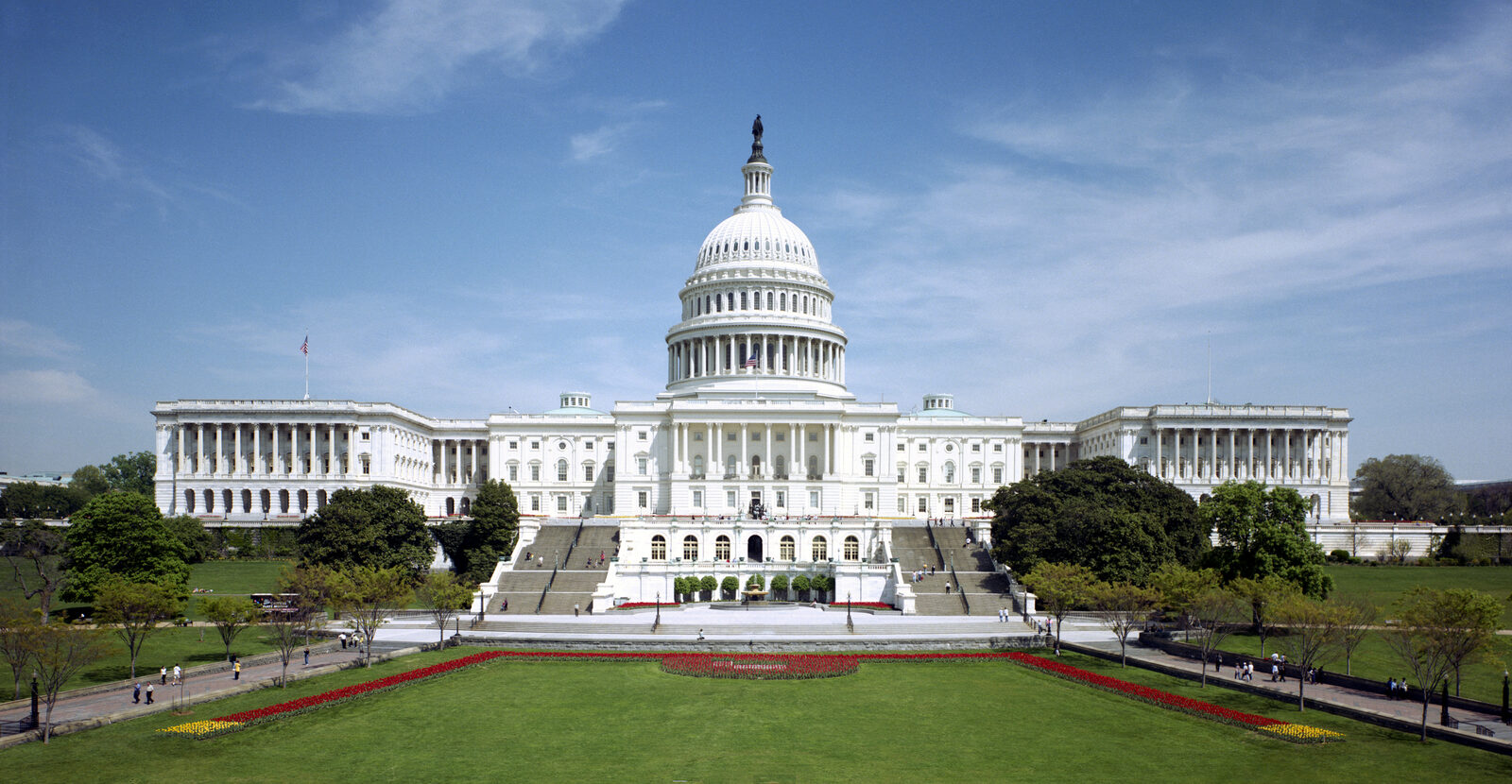
Legislative Watch is The Investigative Journal’s weekly tracker of the bills, votes, and Congressional Budget Office (CBO) scores moving through Washington. Every status and figure below is drawn from public records, with links to the underlying documents.
Congress returned to a crowded calendar in the week of July 13, and the marquee event was a stall rather than a passage. The Senate failed to advance its $1.15 trillion annual defense policy bill, while the House pushed a party-line State Department spending measure across the floor and its Budget Committee unveiled a fiscal blueprint designed to unlock another reconciliation package. Below are the ten developments that most shaped the week, each tracked by bill status and, where available, fiscal score.
1. Senate blocks the FY2027 defense authorization bill
The week’s top development was procedural: on July 14, the Senate rejected cloture on the motion to proceed to S. 4784, the National Defense Authorization Act (NDAA) for Fiscal Year 2027, by a vote of 50 to 46. Sixty votes were required to advance. According to reporting from The Hill and Breaking Defense, Majority Leader John Thune (R-S.D.) switched his vote to “no” — a routine parliamentary maneuver that preserves his ability to call the measure back up later.
Records indicate the roughly $1.15 trillion bill had cleared committee on a bipartisan basis: the Senate Armed Services Committee reported S. 4784 following an 18-9 vote, and the House Armed Services Committee had earlier approved its companion, H.R. 8800, by 44-12. Democratic senators who voted against advancing the bill cited, according to floor statements reported by PBS News and The Boston Globe, the administration’s decision to resume military operations against Iran without a congressional authorization for the use of military force, an unresolved dispute over defense and non-defense spending toplines, and provisions deepening U.S.–Israel military and intelligence cooperation.
Status: Reported from committee; cloture on the motion to proceed failed in the Senate (50-46). The House measure awaits floor action. CBO’s cost estimate for H.R. 8800 is posted at cbo.gov.
2. House passes FY2027 State-Foreign Operations spending bill
On July 15, the House passed its fiscal 2027 National Security–Department of State appropriations bill in a mostly party-line 217-209 vote, according to Roll Call. The $47.3 billion measure would fund the State Department and related agencies at roughly $2.7 billion below the fiscal 2026 enacted level, but about $11.7 billion above the administration’s request. It includes $1.5 billion for the America First Opportunity Fund.
The floor debate reopened Democratic divisions over Israel. An amendment from Rep. Thomas Massie (R-Ky.) to bar the bill’s funds from being used for Israel — and to cut $3.3 billion in Foreign Military Financing — was rejected 104-314. Separate Massie and Roy amendments targeting funding for Jordan and the United Nations also failed. To break an intraparty Republican standoff, GOP leaders merged the spending bill with voter-eligibility legislation, a step Roll Call notes complicates the measure’s path in the Senate.
Status: Passed the House; awaits Senate action, where appropriators remain at a standstill.
3. FY2027 appropriations and the shutdown clock
With the fiscal year ending September 30, the appropriations process is again running behind. The Committee for a Responsible Federal Budget (CRFB) reports that all 12 House appropriations bills have advanced through committee, and the chamber has now passed several on the floor: Military Construction–VA (400-15 on May 15), Agriculture (213-210 on June 4), and the State–Foreign Operations bill this week.
The Senate, by contrast, has yet to move its bills, hampered by a partisan stalemate over topline spending and, as Roll Call reported, the absence of Sen. Mitch McConnell (R-Ky.) and the death of Sen. Lindsey Graham (R-S.C.). Analysts widely expect a continuing resolution will be needed to avoid a lapse in funding on October 1. The nonpartisan Congressional Research Service appropriations status table tracks each bill’s progress.
Status: House — multiple bills passed; Senate — committee markups pending.
4. House Budget Committee releases FY2027 reconciliation blueprint
On July 15, the House Budget Committee released a Fiscal Year 2027 budget resolution structured chiefly to unlock a reconciliation bill. According to CRFB’s analysis of the resolution, it would permit up to $95 billion in primary deficit increases over the decade — roughly $130 billion including interest costs — through reconciliation instructions to four committees: Armed Services ($60 billion), Intelligence ($13 billion), Agriculture ($12 billion), and House Administration ($10 billion).
The resolution’s accompanying tables claim substantial deficit reduction — including $3.4 trillion in unspecified government-wide savings, $2.6 trillion attributed to macroeconomic feedback, and $1.7 trillion in interest savings — but CRFB notes the document “makes no concrete progress on enacting deficit-reducing policies.” CRFB’s related press release characterizes the plan as one that “would allow more than $100 billion of new debt.” The $60 billion defense instruction tracks a White House supplemental request tied to the Iran campaign and stockpile replenishment.
Status: Released by the Budget Committee; text and tables posted via docs.house.gov.
5. CBO scores the bipartisan Build America 250 Act
The CBO released a fiscal analysis of a proposed electric-vehicle registration fee contained in the bipartisan Build America 250 Act (H.R. 8870), a five-year surface transportation reauthorization. In its July 9 estimate, CBO found the fee would raise about $17 billion over ten years, but that offsetting reductions in income and payroll tax collections would leave a net revenue gain of roughly $12 billion.
That figure, CRFB observes, falls well short of the amount needed to shore up the Highway Trust Fund, which faces a shortfall of $131 billion through Fiscal Year 2031 under current law — $148 billion under this bill — and is projected to be exhausted in 2028. A separate CRFB analysis estimates the underlying House highway bill would cost at least $100 billion to $235 billion over a decade.
Status: Introduced; CBO cost estimate published July 9.
6. CLARITY Act awaits a Senate floor vote before recess
The Digital Asset Market Clarity Act (H.R. 3633), which would establish a federal market-structure framework for cryptocurrency, has passed the House and cleared the Senate Banking Committee on a 15-9 vote in May, according to the ABA Banking Journal. It now sits on the Senate Legislative Calendar, eligible for floor consideration.
Supporters are pressing for a vote before the August recess, with August 7 cited as an effective cutoff. Passage is uncertain: with a 53-47 Republican majority and a 60-vote threshold to overcome a filibuster, at least seven Democrats would likely be needed. Negotiators continue to wrestle with disputes over ethics provisions, illicit-finance safeguards, and jurisdiction among committees.
Status: Passed House; on the Senate calendar awaiting floor action.
7. The fiscal backdrop: a $1.8 trillion rolling deficit
The legislative debates are unfolding against a widening deficit. Drawing on CBO’s Monthly Budget Review, CRFB reported that the federal government borrowed $1.8 trillion over the 12 months ending in June 2026. Separately, CRFB noted that Treasury data confirmed a $1.4 trillion deficit for fiscal 2026 through the first nine months, running higher than the comparable period in 2025.
Those figures frame the appropriations and reconciliation fights: with interest costs now among the largest lines in the federal budget, both parties face pressure over how much new borrowing any spending or tax package should carry.
Status: Recurring fiscal data; CBO and Treasury reporting.
8. Bipartisan suspension bills clear the House
Under suspension of the rules — the fast-track process requiring a two-thirds majority — the House passed two measures with lopsided bipartisan margins on July 13. The Improving Travel for American Families Act (H.R. 8897), which addresses family seating on commercial flights, passed 398-12. The Weatherizing Infrastructure in the North and Terrorism Emergency Readiness Act (H.R. 3106) passed 400-7.
Such suspension votes rarely draw headlines, but they account for much of the chamber’s throughput and offer a running measure of where cross-party consensus still holds. Roll-call details are available through the Office of the Clerk.
Status: Passed the House; referred to the Senate.
9. Regulatory watch: open comment periods
Several consequential rulemakings are in their public-comment windows. The Federal Acquisition Regulatory Council’s proposed overhaul of the Federal Acquisition Regulation, implementing Executive Order 14275 on federal procurement, is open for comment through July 23. The Nuclear Regulatory Commission’s proposal to modernize its implementation of the National Environmental Policy Act accepts comments through August 21.
The Forest Service is also taking comment through July 31 on revisions to its directive system. Members of the public can file comments through the federal portal at regulations.gov.
Status: Proposed rules; comment periods open.
10. Legislation relevant to TIJ beats
Several items bear directly on The Investigative Journal’s core coverage areas. On accountability and technology, legal analysts continue to watch a reported administration effort to preempt state artificial-intelligence laws through a draft executive order and a proposed AI litigation task force, a strategy that would rely on the Dormant Commerce Clause and federal preemption theories. As the Congressional Research Service’s primer on federal preemption explains, such conflicts ultimately turn on whether Congress has spoken clearly — and no market-wide AI statute has yet been enacted.
On tax administration and oversight, the House Ways and Means Committee approved seven tax-administration bills on July 1, five of them by unanimous, bipartisan votes. On health policy, Rep. Mariannette Miller-Meeks (R-Iowa), a physician, unveiled bipartisan legislation to eliminate hepatitis C. And on agriculture, the Senate Agriculture Committee has released text for its version of the 2026 Farm Bill and is expected to mark it up in the coming weeks, following House passage of its own version.
Status: Mixed — committee approvals, newly introduced measures, and pending markups.
Editor’s note: Figures and vote counts in this report are drawn from Congress.gov, the Congressional Budget Office, the Office of the Clerk of the House, the Federal Register, and contemporaneous reporting by Roll Call, The Hill, Breaking Defense, PBS News, The Boston Globe, and the Committee for a Responsible Federal Budget. Bill statuses reflect the public record as of July 16, 2026, and are subject to change as the legislative calendar advances. Offices named in this report may exercise a right of reply; corrections will be appended as warranted.