

By Eduardo Bacci, The Investigative Journal
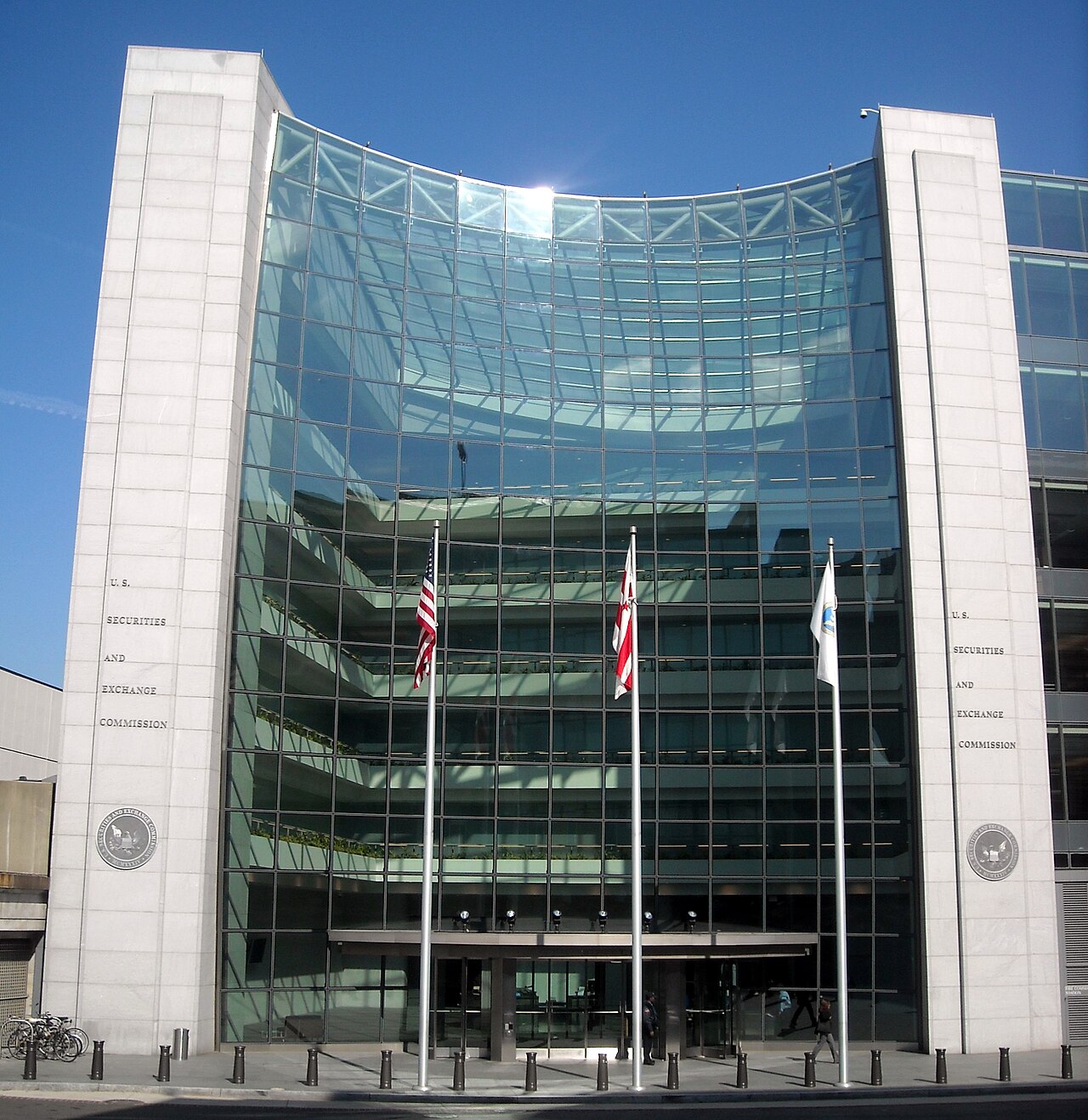
Recent filings posted to the U.S. Securities and Exchange Commission’s EDGAR system and on the Commission’s enforcement and press release pages reveal a steady drumbeat of consequential corporate disclosures and federal securities actions heading into June. The slate is dominated by a freshly filed crypto-fraud case in Texas, the closing chapter of the long-running Elon Musk beneficial-ownership dispute, consent judgments against the Adani brothers in connection with an Indian bribery-tied bond offering, and several material 8-K filings from large U.S. issuers. Today’s digest unpacks the most consequential items and flags filings that warrant deeper investigation.
1. SEC v. Nathan Fuller — $12 million crypto “AI bot” Ponzi alleged in Texas
On May 28, 2026, the Commission filed a civil complaint in the U.S. District Court for the Southern District of Texas charging Nathan Fuller of Cypress, Texas, with operating an alleged crypto-asset trading scheme that raised roughly $12.3 million from about 150 investors. According to the SEC’s litigation release, Fuller marketed joint-venture interests under entities including Privvy Investments, LLC and Gateway Digital Investments and represented that proprietary AI-based trading bots would conduct high-frequency arbitrage across crypto exchanges.
The complaint alleges that Fuller promised some investors returns of 40–50 percent within 30 to 45 days and “guaranteed” profits exceeding 100 percent within 21 days, while also falsely claiming investor funds were secured by a surety bond, FDIC-insured, and covered by professional-liability insurance. Records indicate the bots did not function as marketed; the Commission alleges Fuller misappropriated at least $6.2 million for personal expenses and used approximately $5.5 million to make Ponzi-like payments to earlier investors. Fake account statements and fabricated correspondence from sham entities allegedly sustained the scheme through mid-2024.
The case is significant because it shows that, even under a deregulation-tilted SEC under Chairman Paul Atkins, the Division of Enforcement’s Cyber and Emerging Technologies Unit continues to bring retail-investor fraud cases citing the Securities Act and Rule 10b-5. The allegations remain unproven; the matter is pending.
2. SEC v. Elon Musk — Twitter beneficial-ownership case nears resolution
On May 4, 2026, the Commission filed an amended complaint adding the Elon Musk Revocable Trust dated July 22, 2003 as a defendant and simultaneously moved for entry of a consent final judgment, per the litigation release. Records show the SEC originally sued Mr. Musk in January 2025 alleging that he failed to timely file a Schedule 13D after the Trust accumulated more than five percent of Twitter, Inc. common stock in early 2022, a disclosure delay that securities-law commentators have argued allowed him to keep buying at lower prices before the position became public.
Under the proposed consent judgment, the Revocable Trust — without admitting or denying the allegations — would be permanently enjoined from violating Section 13(d) and Rule 13d-1 and would pay a $1.5 million civil penalty. The filing indicates that, if approved, the SEC will stipulate to dismissal of Mr. Musk in his personal capacity, resolving the case in its entirety. The outcome is a modest financial result given the scale of the underlying transaction, but it closes a procedurally important matter on the books of one of the most-watched public figures in U.S. markets.
3. SEC v. Gautam Adani and Sagar Adani — consent judgments in $750 million bond case
On May 14, 2026, the Commission moved for entry of consent final judgments against Indian industrialist Gautam Adani and his nephew Sagar Adani in connection with the November 2024 enforcement action over a 2021 bond offering by Adani Green Energy Ltd., according to the SEC’s litigation release. The underlying complaint alleged that the defendants orchestrated a scheme to pay or promise hundreds of millions of dollars in bribes to Indian government officials in exchange for above-market energy contracts, while simultaneously touting the issuer’s anti-bribery compliance in materials supporting a $750 million bond offering that raised more than $175 million from U.S. investors.
Without admitting or denying the allegations, both defendants consented to permanent injunctions under Section 17(a) of the Securities Act and Section 10(b) and Rule 10b-5 of the Exchange Act, plus civil penalties of $6 million for Gautam Adani and $12 million for Sagar Adani. The settlements do not resolve parallel U.S. criminal proceedings or Indian investigations; allegations of bribery remain contested by the Adani Group, which has publicly denied wrongdoing. The civil penalty figures are noteworthy because they involve foreign private-issuer conduct adjudicated under U.S. securities laws — a continuing reminder to global issuers that accessing U.S. debt markets carries cross-border disclosure exposure.
4. SEC v. RYVYL, Inc. — “blockchain” fintech disclosures were largely fiction
On April 27, 2026, the Commission filed a settled action against San Diego-based RYVYL, Inc. and its two founders — former CEO Fredi Nisan and former chairman Benzion Errez — alleging that, beginning in October 2020, RYVYL falsely depicted itself in SEC filings as a cutting-edge fintech with proprietary blockchain-based payment infrastructure. According to the litigation release, the company’s actual business was reselling third-party credit card and ACH processing services and it never processed transactions over a blockchain or possessed proprietary blockchain technology.
The complaint further alleges that until May 2025 the company did not disclose that a substantial majority of its transactions involved high-risk merchants such as cannabis dispensaries. Without admitting or denying the allegations, the defendants consented to permanent injunctions under the antifraud and reporting provisions of the federal securities laws, $230,464 civil penalties against each of Nisan and Errez, and five-year officer-and-director bars. The settlement underscores SEC scrutiny of “blockchain-washing” — public-company marketing language that overstates the role of distributed ledger technology in a registrant’s actual operations.
5. SEC v. Reign Financial International — $26 million high-yield investment scheme alleged
On May 7, 2026, the Commission filed an enforcement action in the Southern District of Florida charging Reign Financial International, LLC, Reign Financial International, Inc., their principals Giorgio Johnson and Gary Mills, Florida resident Patrick Allen, and Berone Capital, LLC with running an alleged fraudulent investment scheme involving three “high-yield investment programs” that purportedly raised over $26 million from at least 31 investors. The litigation release states that the programs claimed funds would be used to source opaque financial instruments leveraged through European banks. According to the complaint, no such instruments existed; many investors lost their principal and none received any profits.
The complaint alleges that Berone Capital principals Jeremiah Beguesse and Fabian Stone misappropriated hedge-fund assets on jewelry, luxury cars, and private jet travel, in breach of fiduciary duties under Sections 206(1) and 206(2) of the Investment Advisers Act of 1940. Reign, Johnson, and Mills consented to permanent injunctions, a permanent officer-and-director bar against Johnson, and combined disgorgement, prejudgment interest, and civil penalties of approximately $2.6 million. Litigation against the remaining defendants is ongoing.
6. SEC v. 21 individuals — global insider-trading scheme tied to M&A law firm leaks
On May 6, 2026, the Commission announced charges against 21 individuals in what it described as a decade-long insider-trading scheme that resulted in millions of dollars of illicit profits, according to the SEC’s press release. The complaint alleges Los Angeles M&A attorney Nicolo Nourafchan misappropriated material nonpublic information from his firm’s clients on more than twelve pending corporate transactions between 2018 and 2024, tipping his partner Robert Yadgarov and a downstream network that kicked back portions of trading profits. The U.S. Attorney’s Office for the District of Massachusetts announced parallel criminal charges. International cooperation came from the FBI, FINRA, and securities regulators in Denmark, the United Kingdom, Cyprus, Mauritius, and Switzerland.
Joseph G. Sansone, Chief of the Division of Enforcement’s Market Abuse Unit, said the action reflects an enforcement focus on holding tipping chains accountable “up and down” — a statement consistent with the unit’s continued reliance on cross-market analytics to detect coordinated trading patterns. The allegations remain unproven against most defendants; the case is in early stages.
7. Quanterix Corporation 8-K — CFO departure with full severance
On May 12, 2026, Billerica, Massachusetts-based Quanterix Corporation (Nasdaq: QTRX) filed an Item 5.02 Form 8-K announcing that Chief Financial Officer and Treasurer Vandana Sriram will leave the company effective June 15, 2026. The filing states that Ms. Sriram will receive severance consisting of 12 months of continued base salary, an amount equal to her 2026 annual target bonus, and 12 months of subsidized health benefits in accordance with the terms of her amended employment agreement.
The 8-K expressly states the departure “is not related to any disagreements with the Company on any matter relating to its accounting practices, financial statements, internal controls, or operations” — language designed to head off speculation about a restatement risk. Quanterix is conducting a search for a successor. CFO transitions at small-cap diagnostics companies often coincide with strategic resets; the disclosure warrants monitoring of the next quarterly report for any change in accounting estimates or guidance.
8. Comcast Corporation 8-K — Item 8.01 disclosure
On June 2, 2026, Philadelphia-based Comcast Corporation (Nasdaq: CMCSA) filed an Item 8.01 Form 8-K attaching a press release issued the same day. Item 8.01 is the SEC’s catch-all “Other Events” line and the brief filing on its own does not specify the substantive content of the release. Records indicate Comcast continues to navigate a transition period for its NBCUniversal cable-network spin-off and ongoing pressure on broadband subscriber economics; market participants will read any Item 8.01 disclosure from a Dow-class issuer carefully for guidance signals.
Filings that may warrant deeper TIJ investigation
The Adani consent judgments leave the criminal track in the United States and parallel Indian investigations unresolved; TIJ readers should expect further developments in late 2026 as discovery proceeds. The Nourafchan/Yadgarov insider-trading prosecution merits follow-up reporting on the global law-firm information-security gap it exposed — particularly the apparent reliance on personal devices and informal channels to move nonpublic deal information. The RYVYL settlement adds to a growing dossier of “blockchain-washing” cases that may inform forthcoming SEC guidance on disclosure of distributed-ledger claims. Finally, the Fuller crypto-fraud allegations follow a recognizable pattern — AI hype, “guaranteed” returns, fake insurance — that warrants a recurring TIJ explainer on red flags for retail investors.
Editor’s note: All allegations described above are drawn from publicly filed SEC complaints, litigation releases, press releases, or Form 8-K filings on EDGAR. Defendants who have not entered consent judgments are entitled to a presumption of innocence; settlements were entered without admitting or denying the SEC’s allegations unless otherwise noted. Right-of-reply requests have not been individually sought for this digest; corrections or responses may be submitted to TIJ via the masthead.
Sources: U.S. Securities and Exchange Commission, Litigation Releases LR-26541, LR-26548, LR-26552, LR-26554, and LR-26558; SEC Press Release 2026-44; Form 8-K filings by Comcast Corporation and Quanterix Corporation as posted on EDGAR.