

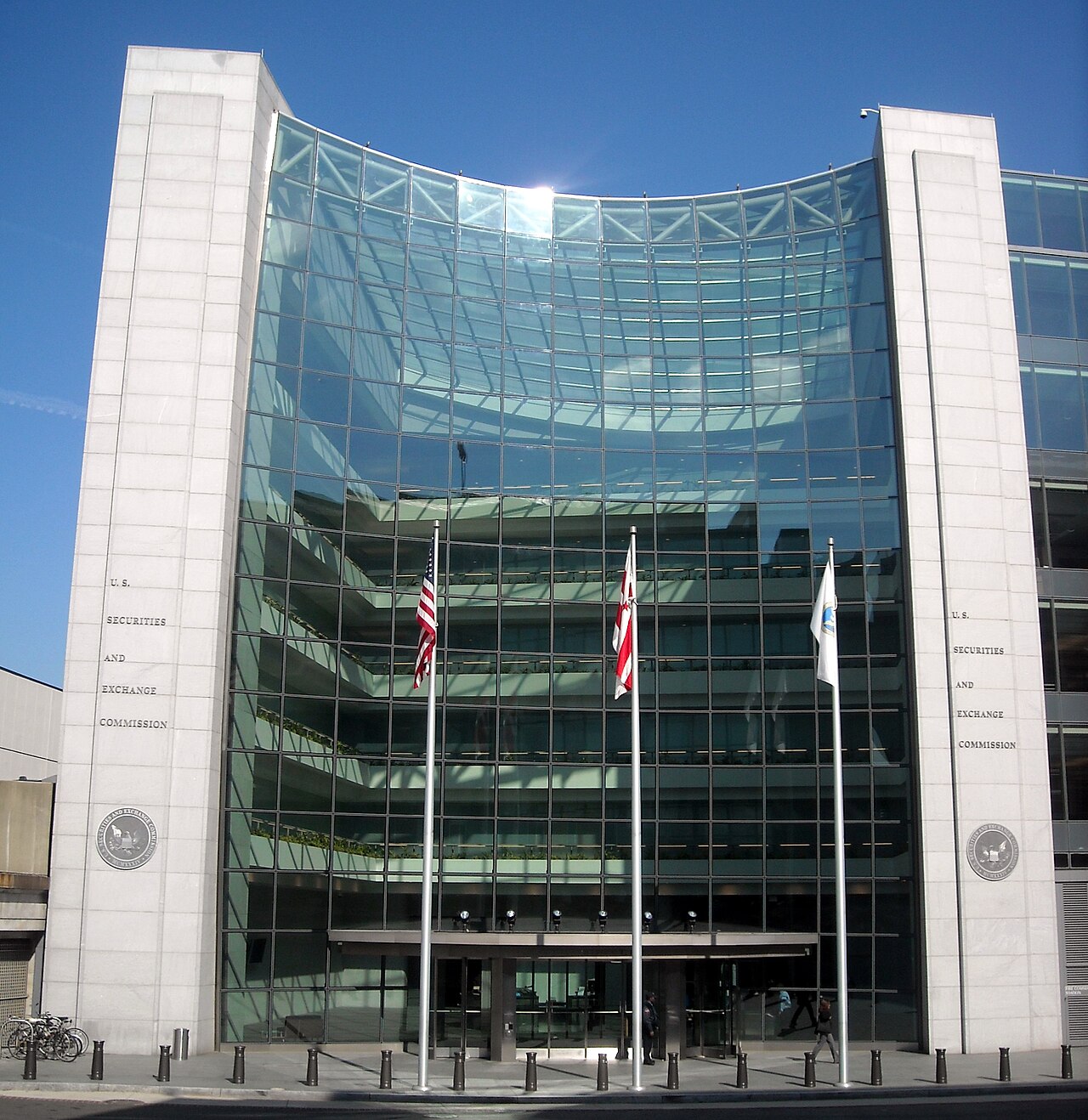
The Investigative Journal’s daily roundup of notable activity at the U.S. Securities and Exchange Commission, drawn from EDGAR filings, litigation releases, and public company disclosures.
The first half of May 2026 produced an unusually rich slate of SEC activity: a settlement with the trust of the world’s wealthiest person, a sprawling cross-border insider-trading indictment, a high-yield-investment receivership, a proposal that could reshape how American public companies report to investors, and a series of 8-K disclosures that altered executive suites and balance sheets. Public records reviewed by TIJ surface eight filings and enforcement actions that warrant attention by investors, compliance professionals, and accountability watchdogs.
1. Musk Revocable Trust agrees to $1.5 million penalty over Twitter disclosure timing
On May 4, 2026, the SEC filed an amended complaint adding the Elon Musk Revocable Trust dated July 22, 2003 as a defendant in Securities and Exchange Commission v. Elon Musk, et al., No. 1:25-cv-00105 (D.D.C.). According to the litigation release, the amended complaint alleges that the trust failed to timely file a beneficial ownership report after acquiring more than five percent of Twitter, Inc. common stock, in violation of Section 13(d) of the Exchange Act and Rule 13d-1.
The trust consented, without admitting or denying the allegations, to a proposed final judgment that would permanently enjoin further Section 13(d) violations and require a $1.5 million civil penalty. The SEC indicated in its consent motion that, if the court enters the proposed judgment, the agency will file a stipulated dismissal of Mr. Musk in his personal capacity, resolving the case in full.
Filings indicate the dispute centered on the timing — not the existence — of the disclosure that preceded Mr. Musk’s eventual acquisition of Twitter. The settlement is a procedural close to a case that has produced multiple rounds of pleadings since January 2025. TIJ notes that the agreement does not constitute a finding of liability, and parties retain their right of reply through court filings.
2. Twenty-one defendants charged in decade-long insider trading network
On May 6, the Commission announced charges against 21 individuals in what the agency described as a “wide-reaching” insider-trading conspiracy that operated between 2018 and 2024. According to Press Release 2026-44, the alleged ringleaders were Nicolo Nourafchan, a Los Angeles-based M&A attorney, and Robert Yadgarov of Long Beach, New York.
The SEC’s complaint, filed in the U.S. District Court for the District of Massachusetts, alleges that Mr. Nourafchan misappropriated material nonpublic information from his law firm’s clients pertaining to more than twelve pending corporate transactions, then tipped the information up and down a chain of associates who agreed to kick back a portion of trading profits. The complaint further alleges that a second corporate lawyer was recruited and tipped additional deal information.
Joseph G. Sansone, chief of the Division of Enforcement’s Market Abuse Unit, said in a statement that the action “highlights the SEC’s unwavering commitment to uncovering sprawling schemes.” A parallel criminal action was filed by the U.S. Attorney’s Office for the District of Massachusetts. The cooperation list — the FBI, FINRA, and financial regulators in Denmark, the United Kingdom, Cyprus, Mauritius, and Switzerland — signals the cross-border footprint of the alleged trading. Charges are allegations; defendants are presumed innocent until proven otherwise.
3. Reign Financial: $26 million high-yield-investment scheme unwound
On May 7, the Commission filed suit in the Southern District of Florida against Reign Financial International, LLC, two principals, a Florida resident, and a related hedge-fund manager and its principals over what the agency characterizes as a fraudulent “high-yield investment program.” According to Litigation Release LR-26552, the scheme raised more than $26 million from at least 31 investors.
The SEC’s complaint alleges that defendants Reign, Giorgio Johnson, Gary Mills, and Patrick Allen marketed three similar HYIPs promising “outsized short-term profits with little or no risk” tied to opaque financial instruments said to involve leverage through European banks. Records suggest the HYIPs did not exist, no investor profits were paid, and substantial principal was lost. The complaint additionally alleges that hedge-fund manager Berone Capital, LLC and its principals, Jeremiah Beguesse and Fabian Stone, misappropriated fund assets — spending, the agency alleges, on “jewelry, luxury cars, and private jet travel.”
Reign, Mr. Johnson, and Mr. Mills consented, without admitting or denying the allegations, to a proposed judgment including a permanent officer-and-director bar against Mr. Johnson, disgorgement of $1,116,650, prejudgment interest of $372,420, and civil penalties of $1,116,650. The remaining defendants face continued litigation. The pattern — outsized return promises tethered to opaque overseas instruments — repeats a typology TIJ has tracked across multiple SEC actions in 2025 and 2026.
4. SEC proposes Form 10-S: optional semiannual reporting for U.S. public companies
On May 5, the Commission proposed rule and form amendments that, if adopted, would for the first time in more than fifty years permit U.S. public companies to file interim reports semiannually rather than quarterly. The proposal, detailed in Press Release 2026-42, would introduce new Form 10-S as an optional substitute for Form 10-Q.
Filings indicate companies electing semiannual reporting would file one semiannual report and one annual report each fiscal year instead of three quarterly reports and one annual report. The new Form 10-S would be due 40 or 45 days after the end of the first semiannual period, depending on filer status. The proposal also amends Regulation S-X to align financial-statement requirements with the new cadence.
SEC Chairman Paul S. Atkins, in a public statement, said the proposal would provide companies “increased regulatory flexibility” to choose the reporting frequency “that best serves their business needs and investors.” The public comment period runs until 60 days after Federal Register publication. For investors and accountability journalists, the proposed change carries significant implications: fewer interim disclosures means longer windows during which material developments may go unannounced outside of 8-K triggers. TIJ will continue to track the comment file and any commissioner statements.
5. Six Flags 8-K: CFO and Chief Legal Officer depart same day
Six Flags Entertainment Corporation (NYSE: FUN) disclosed on Form 8-K that Chief Financial Officer Brian Witherow and Chief Legal and Compliance Officer Brian Nurse both departed effective May 8, 2026. Chief Accounting Officer David Hoffman was named interim CFO. Simultaneous departures of senior finance and legal executives are unusual and frequently warrant follow-up by analysts and corporate-governance observers. Public filings do not, on their face, characterize the departures as for-cause; investors will look to subsequent filings and proxy materials for additional context. TIJ will monitor for amendments to the 8-K and any related disclosures.
6. Plains GP Holdings closes $3.76 billion Canadian NGL sale
Plains GP Holdings, L.P. (Nasdaq: PAGP) reported on Form 8-K the May 12, 2026 closing of the sale of its Canadian NGL business to Keyera Corp. for approximately $3.76 billion. The filing states that roughly $3.3 billion in net proceeds will be applied toward debt reduction, targeting a mid-range leverage profile. The transaction represents a material portfolio realignment at one of North America’s largest midstream operators and follows a multi-month strategic review. The 8-K itself is the controlling disclosure; subsequent 10-Q narrative will quantify the impact on segment results and pro-forma financials.
7. Leadership at the Division of Enforcement
Two recent personnel disclosures frame the enforcement activity of the past two weeks. On April 8, 2026, the SEC named David Woodcock as Director of the Division of Enforcement, succeeding Judge Margaret A. Ryan, who resigned in March. And on April 30, the Commission announced that Deputy Director Jason Burt would conclude his tenure. The pace of recent cases — sweeping insider-trading actions, HYIP receiverships, and the Musk-trust resolution — suggests Mr. Woodcock’s division is moving quickly through its docket. Public statements at the 2026 SEC Speaks conference described the unit as moving “full steam ahead” with a focus on cases involving misled retail investors, fake financials, AI-washing, and abusive trading practices.
8. RYVYL, Inc.: accounting fraud charges filed in April
Although filed shortly before the May window, the April 28 charges against RYVYL, Inc., its CEO Fredi Nisan, and its co-founder Benzion Errez (LR-26541) continue to draw market attention, with several follow-on shareholder filings appearing in EDGAR in early May. The SEC’s complaint alleges revenue-recognition and disclosure misconduct. The defendants have not yet answered the complaint at the time of publication; allegations remain unproven.
Filings TIJ is watching
Two additional EDGAR threads warrant deeper investigation in the coming days. First, the comment file on the Form 10-S proposal — comments from institutional investors, audit-committee chairs, and state regulators will signal whether the proposal advances or stalls. Second, the FY 2025 enforcement results released in Press Release 2026-34 on April 7 describe a “quality-over-quantity” pivot at the Division of Enforcement. The texture of cases filed since — sprawling insider-trading networks, HYIP fraud, beneficial-ownership reporting — fits that posture, and TIJ will continue to track the docket as Director Woodcock’s priorities take fuller shape.
All claims in this article are sourced to publicly available SEC filings and press releases. Allegations described in pending litigation are presented as allegations and are not findings of fact. Defendants are presumed innocent until proven otherwise. Right of reply is available to any party named in this report; corrections will be issued where warranted.
Sources:
- SEC Litigation Release LR-26548 — Elon Musk Revocable Trust
- SEC Press Release 2026-44 — 21 Defendants, Insider Trading
- SEC Litigation Release LR-26552 — Reign Financial
- SEC Press Release 2026-42 — Optional Semiannual Reporting
- SEC Press Release 2026-35 — Woodcock Appointment
- SEC Press Release 2026-41 — Burt Departure
- SEC Litigation Release LR-26541 — RYVYL Inc.
- SEC Press Release 2026-34 — FY 2025 Enforcement Results