

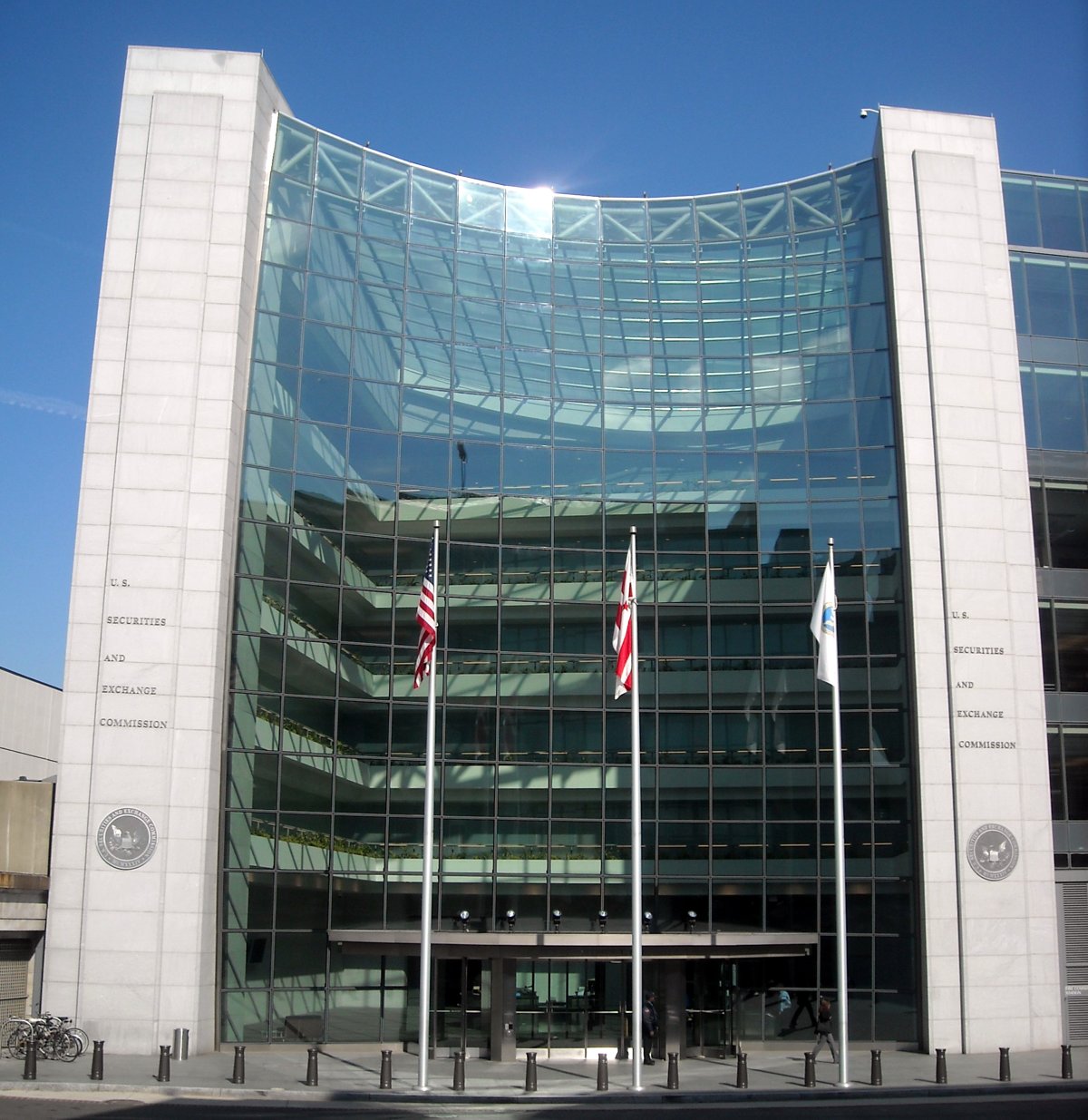
The Investigative Journal’s daily review of notable filings, settlements, and policy actions on the U.S. Securities and Exchange Commission’s public dockets. All items below are drawn from public records; links to the underlying SEC documents are provided throughout. Settlements described as entered “without admitting or denying” the allegations reflect the standard language of SEC consent resolutions and should not be read as findings of fact against the settling parties.
The week closing June 5, 2026 placed corporate disclosure obligations themselves at the center of the SEC’s agenda. The Commission moved to unwind one of the most consequential reporting mandates of the prior administration even as its Division of Enforcement continued to resolve high-profile fraud and reporting cases, including consent judgments against one of India’s most prominent industrialists and a beneficial-ownership settlement tied to the 2022 takeover of Twitter. Below, TIJ reviews seven developments worth watching, then flags the matters most likely to warrant deeper investigation.
1. SEC moves to rescind climate-disclosure rules
On May 29, 2026, the Commission announced a proposal to rescind the climate-related disclosure rules it adopted in 2024, according to the SEC’s press release (2026-49). The rules had required public companies to report certain climate-related risks and, for larger filers, greenhouse-gas emissions data in their registration statements and annual reports. The proposal, if adopted, would remove those requirements from the disclosure framework that governs 10-K and registration filings.
Commissioner Hester M. Peirce issued a statement supporting the move the same day. The proposal records indicate the Commission is acting on the view that the 2024 rules exceeded the agency’s traditional materiality-based approach to disclosure. The change remains a proposal subject to public comment and is not yet final; companies should continue to track the comment period before adjusting reporting practices.
For accountability watchers, the significance is structural: rescission would narrow the universe of standardized, comparable climate data available to investors through SEC filings, shifting reliance back toward voluntary corporate sustainability reports that are not subject to the same liability standards. TIJ will follow the docket as comments are filed.
2. Adani founders consent to final judgments in bond-disclosure case
On May 14, 2026, the SEC moved for entry of final judgments by consent against Gautam Adani and Sagar Adani, the founder and an executive director, respectively, of Adani Green Energy Ltd., per Litigation Release No. 26554. The underlying complaint, filed in November 2024 in the Eastern District of New York, alleged that the two made false and misleading statements about the company’s anti-bribery compliance in connection with a 2021 bond offering that raised more than $175 million from U.S. investors.
Records indicate that, without admitting or denying the allegations, both men consented to judgments — subject to court approval — that would permanently enjoin them from violating Section 17(a) of the Securities Act and Section 10(b) of the Exchange Act and Rule 10b-5. The proposed judgments would impose civil penalties of $6 million on Gautam Adani and $12 million on Sagar Adani, according to the consent documents linked in the release.
The resolution is notable because the original complaint described an alleged scheme to promise hundreds of millions of dollars in bribes to Indian officials while the offering materials touted anti-corruption practices. The settlement addresses the U.S. securities-law disclosure claims; it does not resolve the broader conduct allegations, which remain contested.
3. RYVYL and founders settle “blockchain” disclosure fraud claims
On April 27, 2026, the SEC filed a settled action against payments company RYVYL, Inc. and its two founders, former CEO Fredi Nisan and former board chairman Benzion Errez, according to Litigation Release No. 26541. The complaint, filed in the Southern District of California, alleged that beginning in October 2020 the company’s public filings falsely portrayed it as developing proprietary blockchain-based payment technology when, the SEC alleged, RYVYL was in fact reselling third-party card and ACH processing and never settled transactions through blockchain.
The complaint further alleged the company did not disclose until May 2025 that a substantial majority of its transactions involved high-risk merchants such as cannabis dispensaries. Without admitting or denying the allegations, the defendants consented to judgments that would enjoin them from antifraud and reporting violations, impose civil penalties of $230,464 against Nisan and Errez, and bar both from serving as officers or directors of a public company for five years.
The case is a useful reminder for disclosure analysts that technology-buzzword claims in 10-K and periodic filings remain an enforcement priority where filings indicate the description diverges from operational reality.
4. Musk Revocable Trust settles Twitter beneficial-ownership claim
On May 4, 2026, the SEC filed an amended complaint adding the Elon Musk Revocable Trust as a defendant in its beneficial-ownership case and simultaneously moved for a consent judgment, per Litigation Release No. 26548. The amended complaint alleges the defendants failed to timely file a beneficial-ownership report after the trust acquired more than five percent of Twitter, Inc. common stock in 2022, in violation of Section 13(d) of the Exchange Act.
According to the release, the trust — without admitting or denying the allegations — consented to a judgment that would enjoin future Section 13(d) violations and order a $1.5 million civil penalty. The release states that, upon entry of that judgment, the SEC intends to dismiss Elon Musk in his personal capacity, resolving the matter.
The dispute centered on the schedule for disclosing large stake accumulations — a recurring area of SEC attention because late filings can deprive the market of timely information about control intentions. The penalty is modest relative to the stakes involved, and the resolution closes a case that had been pending since January 2025.
5. Insider-trading charges over CoStar–Matterport deal
On May 18, 2026, the SEC filed settled insider-trading charges against New Jersey residents Oskar Elmgart and Raymond Leibman, alleging they traded ahead of the April 2024 announcement that CoStar Group had agreed to acquire Matterport, Inc., according to Litigation Release No. 26556. The complaint alleges the pair traded on material nonpublic information misappropriated from a close family member who worked at Matterport on a commercial agreement related to the deal.
Filings indicate Elmgart purchased 260 short-term, out-of-the-money call options and Leibman bought 10,000 shares; Matterport’s stock rose 176% on the announcement, yielding $63,050 in realized profit for Elmgart and $30,581 in unrealized profit for Leibman. Both agreed, without admitting or denying the allegations, to injunctions, disgorgement, prejudgment interest, and penalties matching their respective gains. The Commission credited its Market Abuse Unit and FINRA’s assistance.
6. Texas “AI trading bot” crypto fraud charged
On May 28, 2026, the SEC charged Cypress, Texas resident Nathan Fuller with running an alleged crypto-asset scheme that raised roughly $12.3 million from about 150 investors, per Litigation Release No. 26558. The complaint alleges Fuller, through Privvy Investments, LLC, falsely promised returns exceeding 40–50% within weeks and claimed proprietary AI-based trading bots would conduct high-frequency arbitrage.
According to the complaint, the bots did not function as represented; the SEC alleges Fuller misappropriated at least $6.2 million for personal use and made roughly $5.5 million in Ponzi-like payments, while lulling investors with fabricated statements and false claims of FDIC insurance and surety bonding. These are allegations; the matter is pending, and the SEC is seeking injunctions, disgorgement, and penalties. The case reflects continued enforcement focus on AI-themed marketing claims in the crypto sector.
7. Final judgment in LFS Funding offering fraud
On May 20, 2026, a federal court in the Central District of California entered final judgment against Ross Gregory Erskine in a fraudulent-offering case, according to Litigation Release No. 26559. The court had previously granted summary judgment finding Erskine violated registration and antifraud provisions in connection with a partnership offering that raised more than $618,000. The judgment orders disgorgement of $60,625 plus interest and a $100,000 civil penalty, and permanently bars Erskine from soliciting securities transactions.
Policy watch: reporting cadence and the SEC’s strategic direction
Beyond enforcement, the Commission signaled its broader priorities. On June 2, 2026 it published a draft strategic plan for public comment, and on June 1 it announced four new members of its Investor Advisory Committee. The committee met June 4 to discuss, among other topics, the question of quarterly versus semiannual reporting — a debate with direct implications for how often public companies must file periodic disclosures. Chairman Paul S. Atkins is scheduled to appear at the National Investor Relations Institute’s annual conference on June 8, per the SEC’s newsroom calendar.
Filings that may warrant deeper TIJ investigation
Three threads stand out for follow-up. First, the proposed climate-rule rescission deserves close reading of the comment file as it develops, particularly submissions from institutional investors who rely on standardized disclosure. Second, the RYVYL settlement raises questions about how many other small-cap issuers describe themselves with technology claims that filings suggest may outrun their operations; a systematic review of “blockchain” and “AI” self-descriptions in recent 10-K filings could be productive. Third, the Adani consent judgments resolve the U.S. disclosure claims while leaving the underlying bribery allegations unadjudicated — a gap worth tracking across parallel proceedings.
Right of reply: TIJ has not independently contacted the parties named in the pending matters above. Individuals and entities described in pending actions are presumed innocent, and the descriptions here reflect allegations in SEC filings rather than proven facts. Parties wishing to respond may contact the editor.
Sources: U.S. Securities and Exchange Commission — Litigation Releases; Press Releases; LR-26554 (Adani); LR-26541 (RYVYL); LR-26548 (Musk Trust); LR-26556 (Elmgart/Leibman); LR-26558 (Fuller); LR-26559 (Erskine).